

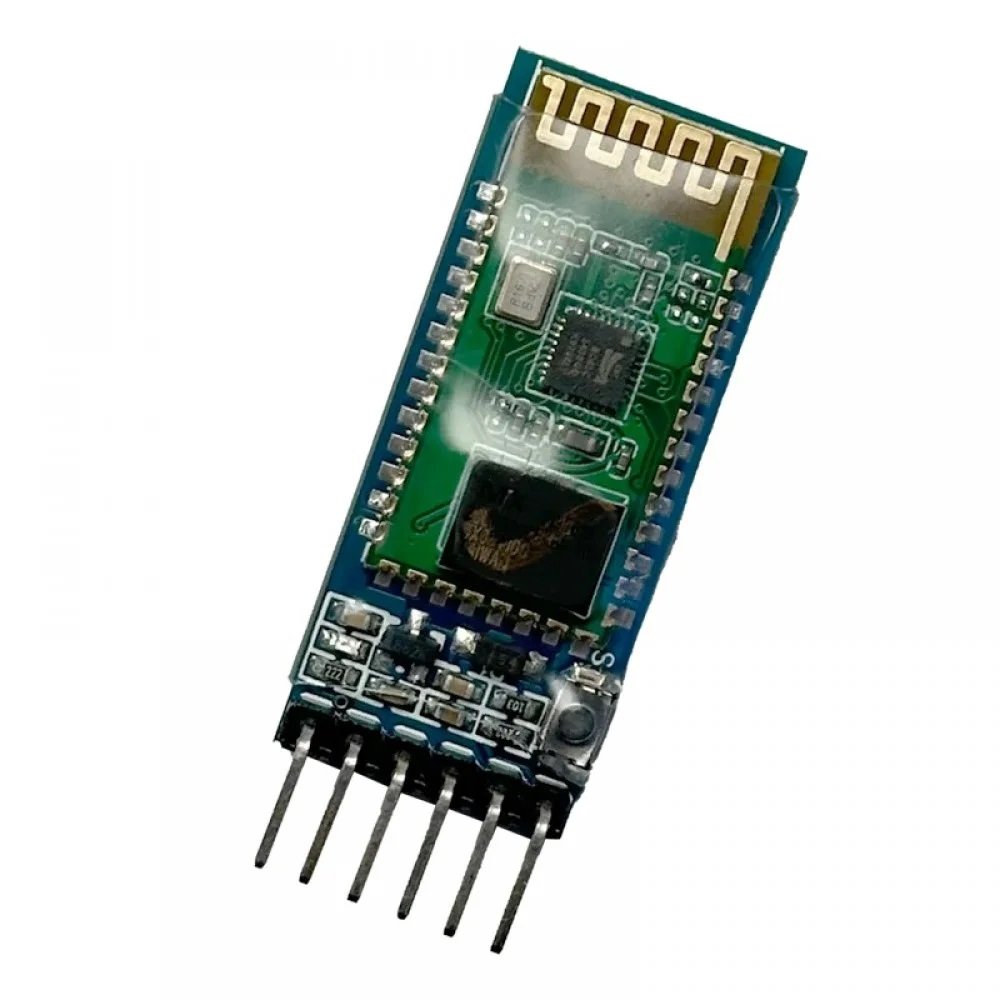
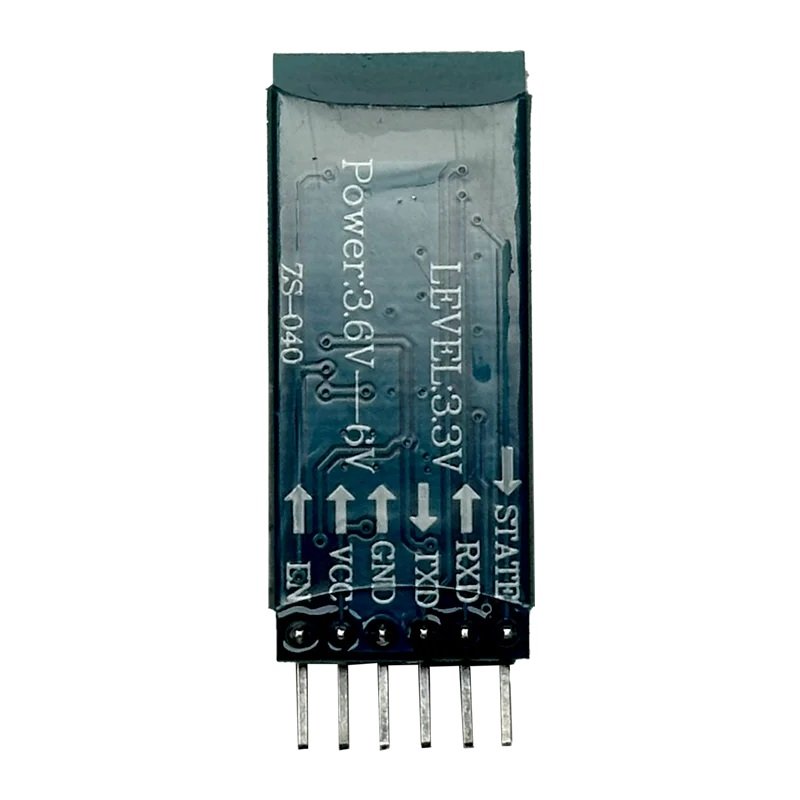
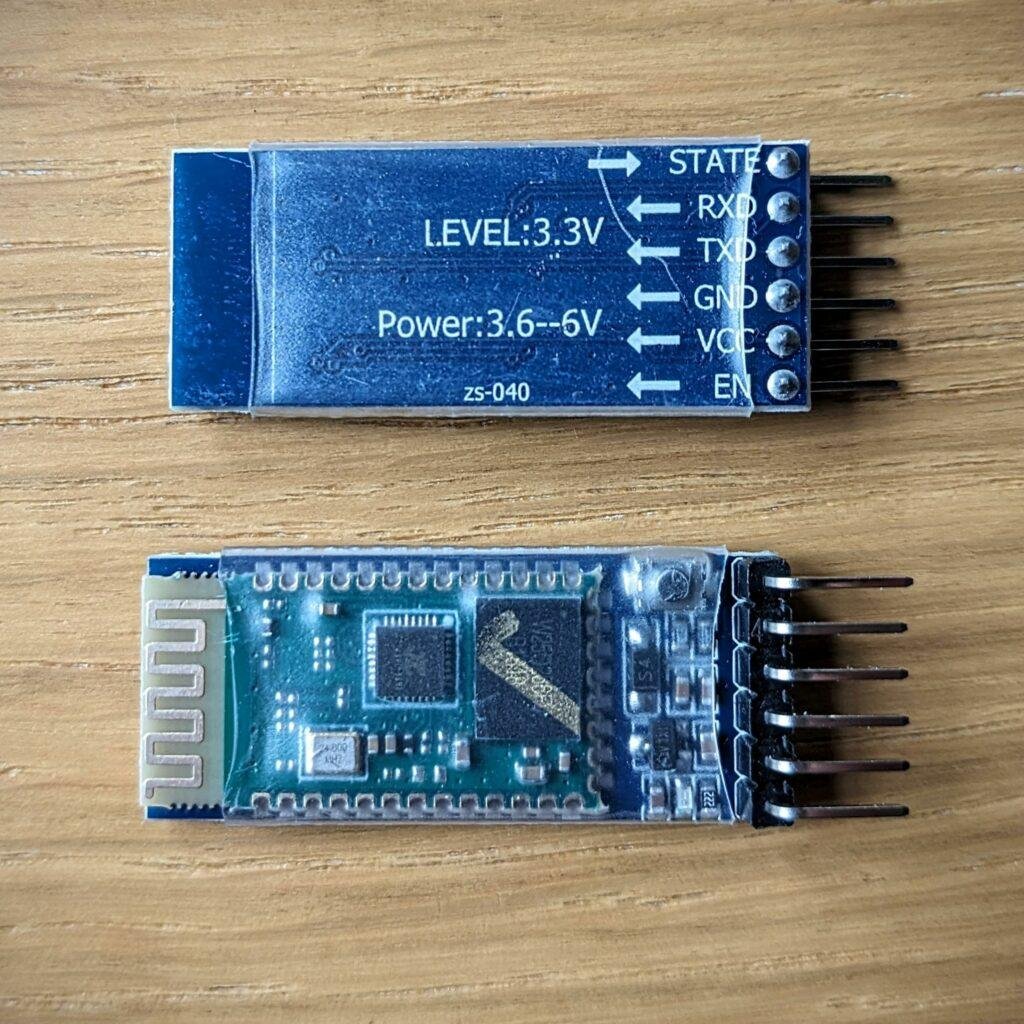
Description
Bluetooth Standard:
The standard HC-05 uses Bluetooth 2.0, while the hc05V2.3_LE uses Bluetooth 4.0 (BLE).
Communication Protocol:
The HC-05 relies on the Serial Port Profile (SPP) for serial data transmission, which is part of Bluetooth 2.0. The hc05V2.3_LE uses a GATT profile and BLE, not SPP.
Compatibility:
Due to the different Bluetooth versions and communication protocols, the hc05V2.3_LE is not compatible with devices or applications designed for the standard HC-05.
Appearance:
While visually similar, the hc05V2.3_LE is often identified by its firmware version, “hc05V2.3_le”, and may have a different LED indicator (e.g., blue LED).
AT Commands:
Some users have reported that the hc05V2.3_LE might respond to AT commands differently than the standard HC-05, such as ignoring the EN pin state or operating at a different baud rate.
Functionality:
The standard HC-05 can function as both a master and a slave, allowing for more complex configurations. The hc05V2.3_LE, being a BLE device, might have different functionalities or limitations depending on the specific implementation.
Introducing the HC-05, Firmware Version hc05V2.3_le:
This version seems to have appeared with no announcement, fanfare, datasheet… or any sort of differentiation from any of the actual HC-05 compatible modules on the market. So far as I can gather from what little information I can find on this new variant of the HC-05, it started appearing around summer 2024, and confusing hobbyists with its non HC-05 like behaviours, despite being sold as, and presenting itself on Bluetooth scans as, an HC-05 module. I’ve not seen a single seller differentiating these from other HC-05 compatible modules – which I’ve fallen foul of!
What’s Different?
The main difference:
The HC-05 is a bit of a legacy Bluetooth device, utilising the Serial Port Protocol (SPP) of Bluetooth 2.0. The new module, which I’m referring to by it’s firmware version hc05V2.3_le utilises Bluetooth 4.0, which does not have a built in SPP, and cannot communicate with the standard HC-05, or devices/apps designed to work with it.
This makes it completely incompatible as an HC-05 replacement.
Other observed differences:
– The Bluetooth name, as observed when scanning for it from a phone or computer, is all in capital letters.
– It automatically enters AT mode for a short period of time after power on. I’ve not managed to measure this, but in the region of 200ms.
– To enter full AT mode, the button needs to be pressed before power is applied, then remain pressed to maintain AT mode
– It requires a 6 digit connection code, instead of the standard HC-05 4 digit.
– When queried with ‘AT+VERSION?’ it responds with ‘hc05V2.3_le’, instead of one of the recognised HC-05 firmware versions.
How can I tell if I’ve got one?
Firstly, compare it to the picture at the start of this post! The differences can be very subtle – the placement and size of the main three components, the two ICs and the crystal, can be very similar. This V2.3_le module has some small passive components (Two caps and a resistor, plus some unpopulated footprints) next to the crystal, and a different layout of unpopulated footprints between the smaller IC and the antenna.
The HC-05 compatible module and an V2.3_le for comparison:

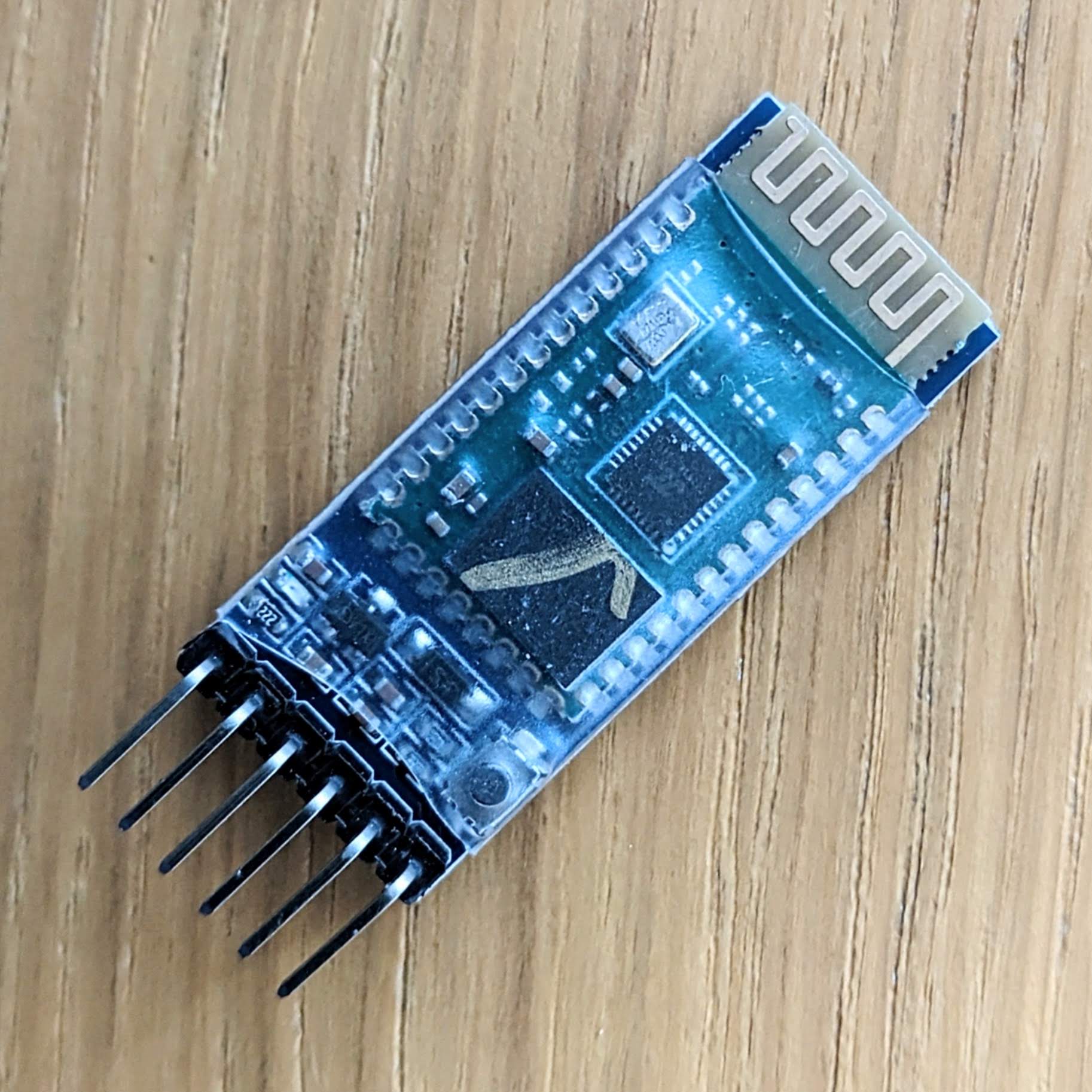
In use, any name you set via AT command will appear in all capitals, and if you connect to the module using a Serial Terminal App such as ‘Serial Bluetooth Terminal’ by ‘Kai Morich’, the device comes up in the Bluetooth LE tab, instead of the Bluetooth Classic tab.
For those of you with an eChook nano board, who I imagine might be the majority of my tiny audience, and are using an Arduino Nano Every, the latest code in the main branch of https://github.com/eChook/eChook-Arduino-Nano now prints out the firmware version of the HC-05 module during the configuration routine.
For everybody else, the relevant snippet of code is below – adapt the serial ports to make sense.
//HC-05 on Serial1, Terminal on Serial
// Ensure HC-05 module is in AT mode when you run this.
Serial1.print(F("AT+VERSION?\r\n"));
Serial1.flush();  //Wait for transmission to end
// Now Check Response
delay(50);
String response = (Serial1.readStringUntil('\n'));
response.trim();
Serial.print(F("HC-05 Version: "));
Serial.println(response);
Can I avoid buying one?
Not easily it seems. I’ve received these three times now, the first time, just a few mixed in with a batch of actually HC-05 compatible modules, and the latest times multiple full trays of them, being sold (probably completely innocently) as HC-05 compatible modules, where the listing pictures show modules using the correct CSR Bluetooth IC, and don’t match the appearance of the hc05V2.3_le modules I’ve received.
When ordering an HC-05 module, ensure the listing states that it is a Bluetooth 2.0 device. Additional good-to-know information would be that it uses the CSR Bluetooth chip, and the Bluetooth SPP Protocol.
Hopefully this guarantees a correct module, but it also gives you an objectively valid reason to return it just in case a BLE hc05v2.3_le module arrives.




From Pune : Harvir Singh
I am From Pune : Harvir Singh
I ahve purched this HC-05 Modual,
Low cost & easy availability
Many users say it’s a very cheap way to add Bluetooth (classic, not BLE) to Arduino, ESP, etc.
Works reasonably well for simple serial link tasks
Many report using it for sending simple commands or data between microcontrollers, phones, PCs etc, and it “just works” after setup.
In a test posted on a forum, someone used two computers plus HC-05 modules, and they could send text and receive it correctly.
elektroda.com
Configurable via AT commands
You can change baud rate, name, password, role (master/slave) etc via AT mode — useful for customizing behavior. Some users praise this flexibility.